The 3,000-Mile Rule Is Obsolete
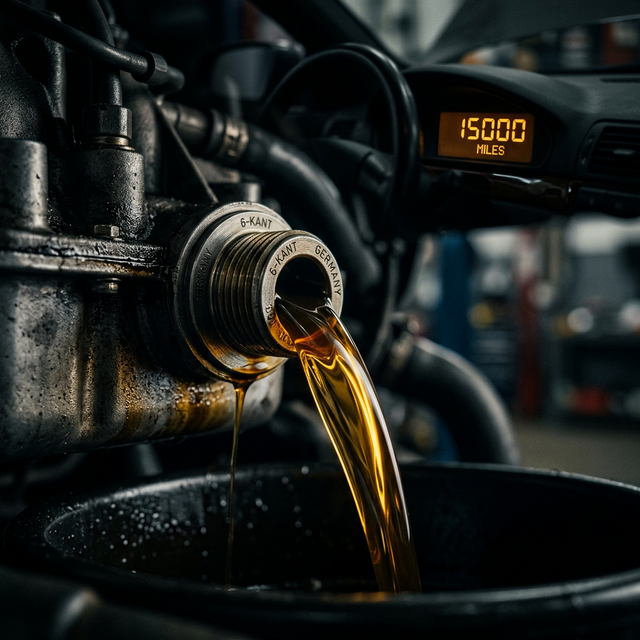
For decades, the automotive service industry recommended changing engine oil every 3,000 miles (approximately 5,000 km). This rule was developed in an era of simple mineral oils and relatively crude engine tolerances. It was never based on science — it was marketing, primarily promoted by oil change service businesses whose revenue depended on frequent visits.
Modern engines and modern synthetic oils have rendered this interval completely outdated. Many automakers now specify oil changes every 15,000–25,000 km, and MÖLLER full-synthetic is formulated to support intervals of 15,000–20,000 km under normal operating conditions.
How Engine Oil Degrades: Understanding the Science
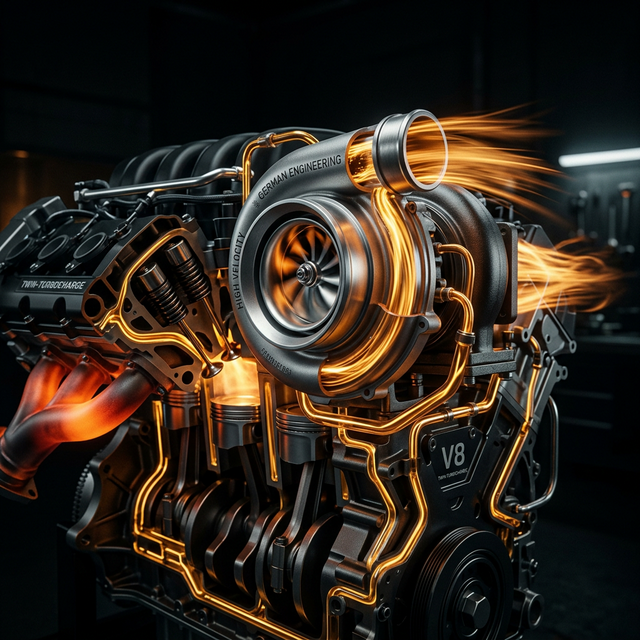
Engine oil performs several simultaneous functions: lubrication, cooling, cleaning, sealing, and corrosion protection. Over time and mileage, several degradation mechanisms reduce its effectiveness:
- Oxidation — Heat and oxygen cause oil molecules to break down, forming acidic compounds and sludge.
- Additive depletion — The antiwear, antioxidant, and detergent additives protect the oil and engine, but they are consumed in the process. Once depleted, protection drops rapidly.
- Fuel and water contamination — Small amounts of unburned fuel and water vapor enter the oil through the piston rings. Conventional oil absorbs these less effectively than synthetic.
- Shear degradation — The high mechanical stress inside a running engine physically breaks down the long polymer chains in multigrade oils, reducing their viscosity index performance.
MÖLLER's synthetic base stocks resist all four of these degradation pathways more effectively than conventional mineral oil. The result is oil that stays in specification longer — genuinely protecting the engine through the full extended interval.
Factors That Shorten Intervals
While MÖLLER synthetic is rated for 15,000–20,000 km, certain operating conditions can shorten the effective interval:
- Severe duty — Frequent towing, track use, or sustained high-load operation.
- Short trips — Many short journeys where the engine never reaches full operating temperature allows water and fuel dilution to accumulate.
- Dusty environments — High particulate environments accelerate filter loading and oil contamination.
- Extended idling — Diesel vehicles used for extended idle operation (e.g., construction equipment).
In these conditions, we recommend shortening the interval to 10,000–12,000 km and using an oil condition monitoring approach.
Modern Methods for Monitoring Oil Condition
Many modern vehicles now feature oil life monitoring systems (OLMs) that calculate remaining oil life based on actual driving conditions rather than simple mileage. These systems consider engine temperature, RPM, load, and idle time to estimate when the oil genuinely needs changing. Following your OLM is a valid approach when combined with a quality synthetic oil like MÖLLER.
The Bottom Line
Change your oil at the interval specified by your vehicle manufacturer, using a quality full-synthetic like MÖLLER that is rated for the specified interval. If your manufacturer specifies 15,000 km and you use MÖLLER, you are following both the manufacturer's guidance and using oil genuinely capable of protecting your engine through the full interval. That is the correct approach — not arbitrary frequent changes that waste money and create unnecessary waste oil.