The Core Difference: How Oil Is Made
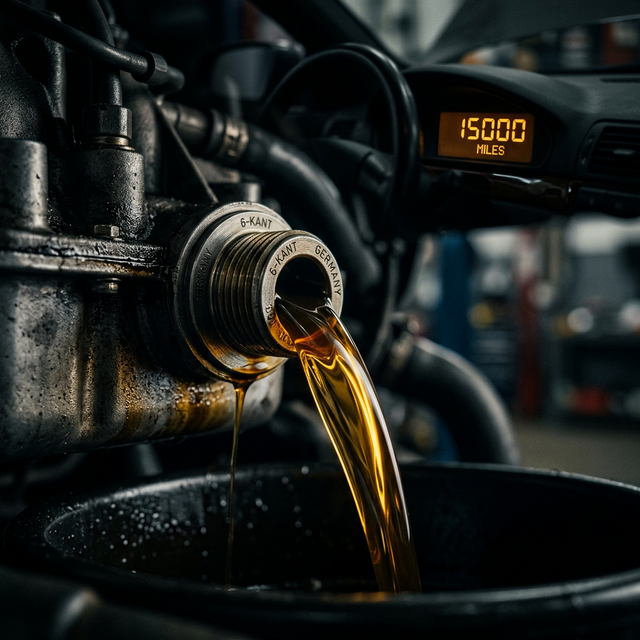
Conventional motor oil is refined directly from crude petroleum. While it lubricates engine components adequately under normal conditions, its molecular structure is inherently inconsistent — a mix of different hydrocarbon chain lengths that behave unpredictably under stress.
Synthetic motor oil, by contrast, is engineered from the ground up. Scientists build uniform molecular chains purpose-designed for lubrication, heat resistance, and flow stability. MÖLLER's full-synthetic formula uses this precision engineering to deliver consistent protection at every stage of the engine lifecycle.
Performance Under Extreme Conditions
Cold-Start Protection
Up to 80% of engine wear happens in the first 30 seconds after a cold start. Conventional oil thickens in cold temperatures, leaving critical engine components momentarily unprotected. MÖLLER synthetic oil maintains a low, stable viscosity even at –40°C, reaching vital engine parts almost instantly on startup.
High-Temperature Stability
Under sustained highway driving or heavy load, conventional oil oxidizes and breaks down faster, forming sludge deposits that restrict oil passages. MÖLLER's advanced additive package resists oxidation and thermal degradation, maintaining a stable protective film even at oil temperatures exceeding 120°C.
Turbocharger Protection
Turbochargers spin at up to 250,000 RPM and reach temperatures of 900°C. When the engine is switched off, oil circulation stops but heat continues to soak into the turbo. Conventional oil carbonizes ("coking") at these temperatures, damaging seals and bearings. MÖLLER's high thermal stability prevents coking, extending turbo life significantly.
Fuel Economy and Drain Intervals
MÖLLER full-synthetic oil reduces internal engine friction by up to 4%, translating directly into improved fuel economy. Fewer trips to the service bay mean real savings for fleet operators — MÖLLER-certified oil intervals extend to 15,000–20,000 km under standard operating conditions, versus the 5,000–7,500 km typical for conventional blends.
Which Vehicles Benefit Most?
- Turbocharged engines — the most demanding application for any oil.
- High-mileage vehicles — synthetic oil's seal-conditioning additives reduce leaks and burning in older engines.
- Commercial fleets — extended drain intervals reduce downtime and total service costs.
- Performance vehicles — MÖLLER synthetic maintains viscosity under high-RPM, track-day conditions where conventional oil would fail.
The MÖLLER Advantage: German Engineering Standards
MÖLLER motor oil is formulated and tested against the most demanding German automotive engineering standards — the same standards applied by premium European automakers. Every batch meets or exceeds ACEA (European Automobile Manufacturers' Association) specifications, ensuring compatibility with the latest engine technologies including start-stop systems, DPF-equipped diesels, and direct injection petrol engines.
Conclusion: The Switch Pays for Itself
For individual drivers, the switch to MÖLLER full-synthetic means peace of mind and longer engine life. For fleet operators, the math is straightforward: fewer oil changes, lower fuel consumption, and extended component life offset the slightly higher upfront cost within the first service interval. The question is not whether to switch — it's why you would wait.